
Real Internet Stability in Germany: Latency, Jitter and Dropouts Across DSL, Cable and Fibre
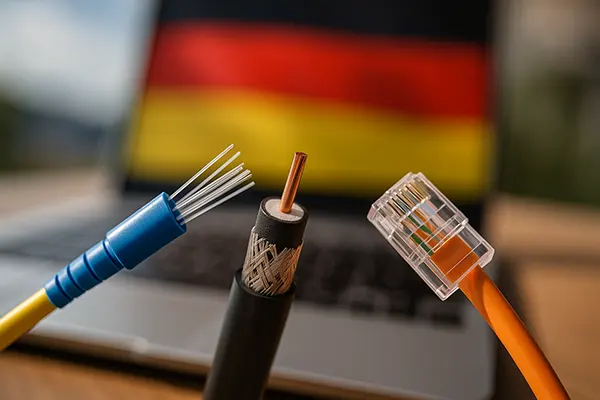
Assessing internet quality in 2025 requires more than headline download rates. Users in Germany increasingly prioritise stable latency, consistent performance during peak evening hours and the absence of disruptive dropouts. This article reviews practical results from mini-tests conducted across several German regions, comparing DSL, cable and fibre connections under everyday usage patterns.
Regional Differences and Real Conditions of Daily Usage
Internet stability in Germany varies substantially between states. Regions such as Bavaria and Baden-Württemberg typically demonstrate more consistent results thanks to newer infrastructure and stronger investment in fibre networks. Northern regions, including Lower Saxony and Schleswig-Holstein, still rely heavily on older DSL cabinets, which leads to increased latency fluctuations during evenings.
In 2025, download speed remains a useful indicator, yet stability proves far more critical for tasks such as remote work or cloud-based applications. Users in North Rhine-Westphalia report that fibre maintains predictable ping levels even under heavy neighbourhood load, while cable users see more pronounced jitter peaks between 19:00 and 22:00. DSL, depending on line length, often collapses under pressure, producing noticeable packet delay variations.
Testing across rural areas shows the widest gap. Many villages still rely on VDSL lines exceeding three kilometres in copper length, causing high baseline latency above 25–35 ms and jitter surpassing 10–18 ms during evening activity. Fibre installations in rural Brandenburg and Saxony show a dramatic improvement, keeping latency stable below 8–12 ms even at peak demand.
Impact of Peak Hours on Latency and Jitter
Latency spikes form the clearest indicator of network stress. During peak traffic periods, cable connections frequently experience congestion at the node level, which results in sudden increases of 30–60 ms on average. Fibre, in contrast, preserves almost flat graphs, with deviations as small as 2–5 ms, depending on distance to the local exchange.
Jitter becomes especially noticeable during high-bandwidth activities such as video calls or multiplayer gaming. Cable lines may introduce jitter above 20 ms, causing unstable voice quality and delayed in-game responses. DSL shows even more irregular patterns, with jitter jumps surpassing 30–40 ms on older copper infrastructure. Fibre maintains the lowest values, often below 5 ms, preserving communication clarity.
Dropouts were most frequently reported on ageing DSL cabinets during tests across Hesse and Rhineland-Palatinate. Temporary interruptions of 1–3 seconds occurred under heavy load. Cable systems rarely cut out completely, yet micro-interruptions affecting packet transmission still occurred during intense evening saturation. Fibre demonstrated near-perfect stability, with no measurable dropouts during the testing period.
Comparison of DSL, Cable and Fibre in 2025
DSL remains the weakest technology in Germany in 2025 for latency-sensitive tasks. Its performance depends heavily on copper line length and the quality of local cabinets. Even with VDSL vectoring, latency under load grows quickly, and jitter remains unpredictable. Typical ping during tests ranged from 18 to 40 ms without load, increasing up to 60–90 ms during evening saturation.
Cable connections provide higher download speeds than DSL but suffer from shared bandwidth architecture. In regions such as Berlin and Hamburg, cable networks demonstrate good off-peak performance with 12–18 ms latency. However, node congestion during the evenings regularly pushes latency above 35–50 ms, sometimes higher, depending on neighbourhood usage.
Fibre shows the most reliable results across all regions. Even in areas still transitioning to full fibre, such as Thuringia, latency remains consistently low. Average ping during tests across multiple fibre networks stayed between 5 and 12 ms, while jitter rarely exceeded 3–4 ms. This positions fibre as the most stable option for streaming, cloud workflows and competitive gaming.
Real-World Behaviour Under Workload
Our tests simulated tasks such as video conferencing, cloud storage synchronisation and online gaming sessions. DSL users faced noticeable disruptions: voice delays, screen freezes and slower cloud uploads. Cable users experienced fewer interruptions yet still encountered irregular spikes during heavy neighbourhood usage.
Fibre maintained stable performance across all test scenarios. Even when multiple devices streamed 4K video, uploaded files and participated in voice conferences simultaneously, fibre connections delivered consistent results with minimal deviation. This makes fibre particularly suited to households with several active users.
Cloud-based applications such as remote desktops, coding platforms and large file transfers benefit most from fibre’s predictable responsiveness. Cable remains workable but inconsistent, while DSL struggles with instability whenever demand intensifies.

Practical Advice for Users in Different German Regions
Before selecting a connection type, users should consider not only advertised speeds but also regional infrastructure. Urban centres often provide robust cable and fibre options, whereas rural areas may rely primarily on DSL. Local provider maps and municipal broadband initiatives offer insight into planned upgrades, especially in areas scheduled for fibre rollout between 2025 and 2027.
For remote workers and gamers, checking evening latency through independent tests provides more useful data than sales brochures. Tools like ping plotters, jitter trackers and long-duration stability tests reveal how a network behaves during real usage. Measuring performance during high-load periods is essential, as this reflects typical household conditions.
If fibre is available, it remains the most reliable choice. Cable may be suitable for households prioritising high download speeds, yet its shared architecture introduces variability that some users cannot afford. DSL serves as a basic fallback, though its limitations become obvious during demanding tasks, especially where copper line distances remain long.
How to Monitor and Improve Stability
Users can enhance stability by placing their router away from electrical interference, applying firmware updates and using wired connections where possible. A direct Ethernet link eliminates local wireless issues, helping isolate true provider performance. Router quality also plays a role, as modern devices handle high-load traffic more efficiently.
Monitoring your connection during different times of day helps identify congestion patterns. If evening instability persists, contacting the provider for line checks or requesting node capacity updates may improve long-term reliability. Providers often upgrade network segments gradually, especially in regions undergoing fibre expansion.
For areas still relying on DSL, switching to a hybrid LTE+DSL solution can reduce peak-hour delays. Some providers offer fallback or bonding options that stabilise latency by supplementing copper connections with mobile networks. While not perfect, this approach markedly improves responsiveness until fibre becomes available.